Showing posts with label Judaism. Show all posts

Sunday, January 2, 2011

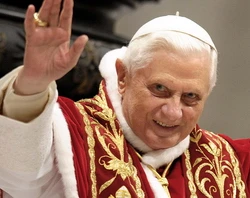
Pope Invites Religious Leaders to World Summit


.- The Pope invited religious leaders from around the world to Assisi, Italy to renew their commitment to peace.

Pope Benedict announced plans for the peace summit in his words before the Angelus on Jan. 1. The October gathering will commemorate the 25th anniversary of the first World Day of Prayer for Peace, reported Vatican Radio.

The Pope's announcement came shortly after suicide bombers in Egypt killed 21 Coptic Christians leaving Mass on Jan. 1.

In addition to calling for the October meeting, Benedict XVI asked Catholics to pray “for peace throughout the world.”

“I invite all of you to join in heartfelt prayer to Christ the Prince of Peace for an end to violence and conflict wherever they are found.”

The Pontiff then prayed that those gathered receive “God’s abundant blessings” in 2011.

Sunday, October 31, 2010

Priest Denies Synod's Political Tone


.- The Synod for the Middle East, a historic gathering of the region's bishops, concluded October 24, amid controversy over alleged bias in its concluding message. One expert on the region told CNA that the document reflected pastoral needs, not a political agenda. 

The bishops' concluding “Message to the People of God” criticized Israel in detail, but omitted most of the criticisms made against Islamic governments during the synod. Some observers took remarks about using religion to “justify injustices” as a blanket rebuke of Israel, a charge participants denied.

Shortly after his return from Rome, synod participant Monsignor Robert Stern, secretary general of the Catholic Near East Welfare Association. He spoke with CNA about some of the considerations that shaped the synod's concluding message. 

“The synod really didn't have a political focus at all,” Msgr. Stern said, recalling that its main purposes were to strengthen bonds between diverse groups of Catholics, and to ensure a continuing Middle Eastern Christian presence and witness. 

As such, he said, the synod's final message did not contain “the same degree of detail about every situation where Christians have difficulties in the Middle East.” Rather, he said, the message reflected “two major concerns” that took priority as “the more compelling matters,” Palestine and Iraq. Migration has greatly diminished both regions' Christian populations in recent years.

In this context, he said, the bishops' choices of emphasis and restraint --which could appear to focus on Israel's treatment of Palestine, while treading lightly with Islamic regimes-- should not be interpreted as political statements, but as expressions of their pastoral priorities, and suggestions toward peace. 

“They did list out several of the issues that are raised by (Muslim and Christian) Palestinians,” the monsignor said, noting that all of the specific criticisms of Israel were ongoing “issues of concern for the Christians who live in Palestine.” The synod fathers, he recalled, “also mentioned being conscious of the suffering and insecurity in which Israelis live” because of violence from some Palestinians.

Monsignor Stern also acknowledged that fear for the safety of Christians in some Muslim countries may have prompted the synod fathers to moderate their comments. This was, he said, a “prudential judgment,” since Christians throughout the region can suffer consequences of their leaders' remarks.

“Most of these bishops come from ... places where they're a very small minority, they're bishops of a very small community, and they feel a lot of social pressure living in an Islamic world,” he observed. “A lot of them are in politically very uncertain circumstances-- where they're at risk, and their people are at risk. So, they don't have quite so open and expansive of a way of talking about the situation.” 

“Just the experience for them to come to Rome, and talk to one another, and experience a kind of free ambiance where anything can be said ... was a very powerful experience for them-- to have solidarity, to be gathered around the Pope, and to be able to reflect.”

He said that the Middle Eastern bishops' “Message to the People of God,” whatever its possible limitations might be, was a historic and crucial statement-- giving guidance to communities whose decisions in the near future could make the difference between their survival or disappearance.

“The whole thrust of it is saying, 'What's our ... situation in the Middle East, and what do we want to say to our people here, or our people abroad? How do we stick together as Catholics? ... How do we deal with our brothers and fellow citizens, the Muslims and Jews?'”

Saturday, October 30, 2010

The Middle East: A Catholic Perspective


This article comes from Chiesa.  

It is from a few weeks ago, but the perspective is relevant.
----------------------------------------------------

Christians in the Middle East.  Crushed between Islam & Israel

ROME, October 19, 2010 – The special synod for the Middle East that has been underway at the Vatican for ten days is shedding light on a segment of the Christian world in dramatic movement, in several directions and with an uncertain future.

The exodus of Christians from those lands is an important part of this movement. But it is not a new phenomenon. During the first half of the twentieth century, the extermination and expulsion from Turkey of the Armenians, and then the Greeks, were of colossal proportions. Today the exodus continues from several places, and in different degrees. The fact is that in comparison with the twelve million faithful of the ancient Eastern Churches who today live between Egypt and Iran, there are now about seven million living elsewhere.

For many decades there have been more Armenians in the diaspora than in their native land. The Maronite Lebanese have dioceses for their emigrants in the United States, Canada, Mexico, Brazil, Argentina, Australia. The Syriac Orthodox have an eparchy in Sweden. The Iraqis have created a "Chaldean Town" in the city of Detroit. Most of the Christian emigrants from Bethlehem are going to Chile.

At the same time, however, an inverse movement is also underway in the Middle East. On the Arabian Peninsula alone – according to statements at the synod from the two apostolic vicars of the region, Paul Hinder and Camillo Ballin – three million Catholics have already come from abroad seeking jobs, most of them from the Philippines and India.

The Arab countries of the Gulf "have a great need for manual labor," explained the Syro-Malabar Indian bishop Bosco Puthur, from whose region 430,000 people have departed. But what awaits these emigrants is very bitter, if measured according to religious and civil liberties. The archbishop of Addis Ababa, Berhaneyesus Demerew Souraphiel, said that the thousands of women who leave Ethiopia for the Middle East each year, to work as maids, in order to obtain entry visas "change their Christian names to Muslim names, and dress as Muslims, being indirectly forced to renounce their roots," and in any case go to meet a life of "exploitation and abuse."

In describing the living conditions of Christians in Muslim countries in the Middle East, the bishops used understandably prudent words. With a few exceptions.

One of the most unvarnished was the representative in Jordan for the patriarchate of the Iraqi Chaldeans. He said that there is "a deliberate campaign to drive out the Christians. There are Satanic plans by extremist fundamentalist groups against Christians not only in Iraq, but in all the Middle East."

The Iranian Thomas Meram, archbishop of Urmya of the Chaldeans, did not hesitate to quote the psalm of David: "For you we are massacred every day." And he continued: "Every day Christians hear it said, from the loudspeakers, from the television, from the newspapers, that they are infidels, and for this reason they are treated as second-class citizens."

Entirely the opposite of what was asserted at the assembly that same day, Thursday, October 14, by Iranian ayatollah Seyed Mostafa Mohaghegh Ahmadabadi, a guest of the synod, according to whom "in many Islamic countries, above all in Iran, the Christians live side by side in peace with their Muslim brothers. They enjoy all the legal rights of any other citizen, and exercise their religious practices freely."

But the synod is more than a simple recognition of the living conditions of Christians in the Middle East.

From the debate there have emerged critical judgments on the Catholic Church in those countries, and proposals for change.


DIVIDED CHRISTIANS


A first critical judgment concerns the lack of unity in the Catholic Church in the Middle East.

The five great traditions on which it draws – Alexandrian, Antiochian, Armenian, Chaldean, Byzantine  – and the even more numerous rites in which it is structured often produce division, misunderstandings, and isolation, instead of mutual enrichment.

"An ethnic and nationalist Church is against the work of the Holy Spirit," warned the Chaldean Iranian archbishop of Tehran, Ramzi Garmou.

And he had reasons to say so. The Coptic Egyptian bishop of Assiut, Kyrillos William, lashed out in the assembly against his Latin rite confreres, because, by also celebrating their liturgies in Arabic, "they attract our faithful and separate them from our Church."

The Greek-Melkite bishop of Australia, Issam John Darwich, also complained about the "growing intolerance among the Eastern Catholic Churches." And he gave the example of "the sad situation of Lebanon, where every Church seems interested in obtaining political benefits for itself, and more than the other Churches."

In effect, Lebanon is indeed a country in which Christians enjoy more freedoms than in other countries of the Middle East, but it was also described this way at the synod by one of its Greek-Melkite bishops, Georges Nicholas Haddad:

"Freedom of religion and of conscience remains the privilege of the 18 historically recognized communities (12 Christian, 4 Muslim, one Druze, and one Jewish). Anyone who is not part of these is excluded from any right to the exercise of his liberties. Any attempt characterized by proselytism on the part of one or another community can prompt extreme and sometimes violent reactions. Every conversion is perceived as a heavy blow inflicted on the community of origin of the convert, and constitutes a social rupture."

Muhammad Al-Sammak, an adviser to the Grand Mufti of Lebanon and another Muslim figure invited to speak at the synod, did not say anything much different when he stated – before the assembly – that "the Christian presence in the East is a necessity both for Christians and for Muslims" and – outside of the assembly, in a press conference – that "belief is a matter of conscience, but when changing religion also means changing 'sides', it becomes an act of betrayal of the state, and it must be treated as such."

Against this background, numerous voices have been raised at the synod to call for more unity among the Catholic Churches in the region, and between these and the Orthodox Churches and Protestant confessions.

In particular, a proposal has been made to arrange as soon as possible a common date for the celebration of Easter.

Some have urged dialogue with "enlightened" Muslims, those open to a "critical interpretation of the Qur'an" and to an "interpretation of Islamic laws in their historical context."


MORE POWER FOR THE PATRIARCHS


A second series of proposals concerned pastoral care for the faithful of the Catholic Church of the Middle East who have emigrated abroad, the role of the patriarchs, and their relationship with the see of Rome.

As a rule, the patriarchs and bishops have jurisdiction over their respective territories, not over the faithful who have emigrated to other countries. But in some cases, the latter have become more numerous than the faithful who have remained in their countries. And if they are left without care, they tend to abandon the traditions of their Churches of origin. A number of voices at the synod have therefore  requested that the patriarchs and bishops be given authority over the entire flock of their faithful, wherever they may be, at home and abroad.

Together with this request, some have also asked for the freedom to send married priests for the pastoral care of the Eastern faithful in diaspora. In the West, in fact, where the clergy is celibate, the presence of married Eastern priests with pastoral duties is not permitted. But with the number of emigrants increasing, and almost all of the lower clergy of the Eastern Churches being married, it is increasingly difficult for the Eastern patriarchs and bishops to find celibate priests to send abroad for the care of their faithful. Hence the request to remove the ban.

As for the role of the patriarchates, the request has surfaced several times at the synod to "give back" to them the authority that they had in the first centuries of the Church, in relation to the pope. In particular, by giving them more autonomy in appointing local bishops. And also by associating them "ipso facto" with the college that elects the supreme pontiff, "without the necessity of receiving the Latin title of cardinal." In short, by assigning the pope "a new form of the exercise of the primacy inspired by the ecclesial forms of the first millennium," with the role of the patriarchs reinforced. All of this partly for the purpose of bringing the positions of the Catholic Church closer to those of the Eastern Orthodox Churches.


ON MISSION AMONG THE MUSLIMS


A third block of proposals concerned "the need to recover the missionary aspect of the Church." A new and courageous proposal in predominantly Muslim countries, on the part of Churches that for historical reasons and motives of survival have largely closed in on themselves.

Coptic Egyptian bishop Youhannes Zakaria of Luxor said that in spite of the difficulties and the dangers, "our Church must not be afraid or ashamed, it must not hesitate to obey the mandate of Lord, who asks it to continue preaching the Gospel."

And the Chaldean Iranian archbishop of Tehran, Ramzi Garmou, delved even deeper into this need. After saying that "a new missionary impulse" is vital "to knock over the ethnic and nationalist barriers that threaten to asphyxiate and make sterile the Churches of the East," he recalled "the fundamental importance of monastic life for the renewal and reawakening of our Churches."

And he continued:

"This form of life that was born in the East, was at the origin of an extraordinary missionary expansion and an admirable witness of our churches during the first centuries. History teaches us that the bishops were chosen among the monks, that is to say men of prayer and with a deep spiritual life, having vast experience in the 'things of God.' Today, unfortunately, the choice of bishops does not obey the same criteria and we can see the results which are unfortunately not always happy ones. The bi-millenary experience of the Church confirms to us that prayer is the soul of the mission, it is thanks to this that all the activities of the church are fruitful and bear many fruits. Also, all those who participated in the reform of the church and gave back its innocent beauty and eternal youth were essentially men and women of prayer. For this reason our Lord invites us to pray without ceasing. With regret and bitterness we see that monasteries of contemplative life, source of abundant grace for the people of God, have almost disappeared in our Eastern Churches. What a great loss! How sad!"

It is easy to glimpse in these words a reflection of the theses of pope Joseph Ratzinger, according to whom the secret of good Church governance – and of its reform – is "thought illuminated by prayer."


ISRAEL A "FOREIGN BODY"?


At a synod dedicated to the Middle East, finally, it was to be expected that there would be an important reference to Israel and to the Jews.

But instead, almost no one has talked about it. The only synod father who dedicated his entire speech to it was, on October 11, the patriarchal vicar of Jerusalem for Hebrew-speaking Catholics, Jesuit Fr. David Neuhaus, who expressed his hope for more communion, in Israel, between Arabic and Hebrew-speaking Catholics.

These latter, as is known, are considered by many of their Arab confreres a foreign body. And the Holy See is not helping them, by declining to appoint a bishop to care for them.

On October 13, one of the guest speakers at the synod was Rabbi David Rosen, an adviser to the Grand Rabbi of Israel. His speech was wide-ranging, very positive, and showed great appreciation for the work of the current pope and of his predecessor.

But after him, no one at the synod has followed up on his words of dialogue between Jews and Christians.

Since the assembly has remained in almost complete silence on the issue, an even bigger impact has been made by a document circulated outside of the synod hall: a document entitled "Kairòs – A moment of truth" and blatantly anti-Israeli in its contents. In it, Israel's occupation of the Territories is called "a sin against God and humanity," and the very foundation of the Jewish state is traced back to a sense of blame on the part of the West because of the Holocaust, the healing of which is held to be behind the occupation of Palestinian land. The document ends with a call to boycott Israel.

The origin of "Kairòs" goes back a number of months. When it was made public for the first time, on December 11, 2009, in Bethlehem, the document bore the signatures of a former Latin rite patriarch of Jerusalem, Michel Sabbah, of Greek Orthodox archbishop Atallah Hanna (a bitter rival of the Greek Orthodox patriarch of Jerusalem, Theophilus III), of the Lutheran bishop of Jerusalem, Munib Younan, and of thirteen other Arab Christian representatives.

Its most active promoter was the Lutheran Younan. He was successful in involving the World Council of Churches, an association of 349 Christian denominations all over the world, with headquarters in Geneva. And in fact, when a message from the secretary general of the WCC, Olav Fykse Tveit was read at the synod, the "Kairòs" document was cited favorably.

But Younan and the other authors of the document also brought pressure, in the days following its publication, on all the leaders of the Christian Churches in Jerusalem, in order to obtain their support.

What they obtained, on December 15, 2009, was a statement of a few lines, without any explicit reference to "Kairòs," which began with these words: "We, the patriarchs and heads of the Christian Churches of Jerusalem, have heard the cry of hope that our children have raised in these difficult times that we are living through in this Holy Land. We support them."

Nothing more. But from then on, the "Kairòs" document has always been distributed with this statement at the top, as if it were a prologue, and with the signatures of all the leaders of the Christian Churches in Jerusalem, including Latin patriarch Fouad Twal and the custodian of the Holy Land, Franciscan Fr. Pierbattista Pizzaballa, as if they were the true signatories of the entire document.

For those who know and have read the writings of Fr. Pizzaballa, his adherence to the ideas of "Kairòs" and to the boycott of Israel is simply unthinkable. And yet the Custody of the Holy Land, which he heads, contributed along with other Catholic associations like Pax Christi and with former patriarch of Jerusalem Sabbah to giving publicity to the document on October 19 in a facility owned by the Vatican, a few steps from the synod hall.

Not only that. On October 14, Maronite archbishop Edmond Farhat – former apostolic nuncio and official representative of Vatican politics – spoke at the synod.

And the judgments he expressed confirmed that for the Holy See – although it accepts the objective of two states for Jews and Palestinians – the assumption still applies that the ultimate cause of all of the evils in the Middle East is precisely that "foreign body" which is Israel.

Nuncio Farhat said:

"The Middle Eastern situation today is like a living organ that has been subject to a graft it cannot assimilate and which has no specialists capable of healing it. As a last resource, the Eastern Arab Muslim looked to the Church, believing, as he thinks himself, that it is capable of obtaining justice for him. This is not the case. He is disappointed, he is scared. His confidence has turned into frustration. He has fallen into a deep crisis. The foreign body, not accepted, gnaws at him and impedes him from taking care of his general state and development. The Middle Eastern Muslim, in the great majority of cases, is in crisis. He cannot make justice on his own. He finds any allies neither on the human nor the political level, let alone the scientific level. He is frustrated. He revolts. His frustration has resulted in revolutions, radicalism, wars, terror and the call (da’wat) to return to radical teachings (salafiyyah). Wishing to find justice on his own radicalism turns into violence. He believes there will be more of an echo if he attacks the constituted bodies. The most accessible and fragile is the Church."

If one of the intentions of the Vatican authorities was to "moderate" the intransigent aversion to Israel of the Arab Churches of the Middle East, the words of nuncio Farhat have done the opposite.

________________


The documents of the synod, on the Vatican website:

> Special Assembly for the Middle East, October 10-24, 2010

__________


The web page from which the "Kairòs" document can be downloaded, in thirteen languages:

> "Kairòs – A moment of truth"

__________


A previous article from www.chiesa expressly dedicated to Vatican policy on Israel:

> In Gaza, the Vatican Raises the White Flag (4.1.2009)

__________


English translation by Matthew Sherry, Ballwin, Missouri, U.S.A.

__________
19.10.2010

Custodian of Holy Land: Anti-Zionism a "Normal Thing"


.- Many Christians in the Middle East harbor “anti-Zionist” resentments, but those resentments are rooted political injustices and not theology, according to a top Church official in the Holy Land. 

Franciscan Father Pierbattista Pizzaballa said the tensions were reflected in the recent Synod for Bishops on the Middle East, but he rejected charges that the synod was biased against Israel. 

"I don't think the Synod Fathers were taken hostage by anyone," he told the Italian newspaper Il Foglio Oct. 27. 

Father Pizzaballa is the Vatican-appointed custodian of the ancient Christian holy sites in Israel and Palestine. In an interview with the paper’s Vatican analyst Paolo Rodari, he responded to charges made by Israel’s deputy foreign minister, Danny Ayalon. 

Ayalon charged that the synod had become an "important forum for political attacks" and was "taken hostage by an anti-Israeli majority." 

"That the Arab world might have little sympathy for Israel is evident," Father Pizzaballa said, noting that 90 percent of Christians in the Middle East are of Arab origins. He called it a "normal thing" that this sentiment might surface "in some way" during the synod’s discussions. 

But the synod's final message also included condemnations of  anti-Semitism and anti-Judaism and a reminder that Christians must study both the New and the Old Testaments, he said. 

It is "not a given," that the synod fathers of the Middle Eastern world would write these words, he said.

Father Pizzaballa also pointed out that the synod’s final message condemned all forms of racism and “Islamaphobia,” and called Jews, Muslims and Christians to greater commitment to dialogue.

While individual bishops might express their opinions on these issues, only the final message of the synod reflects the official position of the assembled Church leaders, he stressed.
The synod’s message, Father Pizzaballa said, is “not the voice of the Vatican nor the Church.” It is rather "simply the voice of the synod fathers." 

The synod’s final message offered little new with respect to Israel, he added. The gathering of bishops condemned Israel’s continued occupation of Palestine and any use of God's name to justify violence. These are positions "already expressed in the past” by Church leaders, he noted. 

Accusations that the synod fathers harbor an “anti-Zionist” bias are misguided. Zionism, the belief that Israel has the right to a homeland in the territory promised to the Jews in the Bible, is a “Western category,” Father Pizzaballa said. “It is a way with which the West tries to describe a situation."

"That a certain anti-Zionism might be present also among Christians in the Middle East is evident,” he said. “But this anti-Zionism, if it exists, it does not have theological foundations. It is more than anything a sentiment motivated by the Israeli-Palistinian conflict. It is a reaction to a dramatic situation and in which immediate solutions are not seen." 

The issue of anti-Zionism surfaced after remarks by Melkite Archbishop Cyrille Salim Bustros of Newton, Mass. in the concluding press conference of the synod, Oct. 23. 

Archbishop Bustros said the biblical ideas of the “chosen people” and the “promised land” could not be used to justify “the return of Jews to Israel and the displacement of Palestinians." He added, "Sacred Scripture should not be used to justify the occupation by Israel of Palestine.”

Father Pizzaballa said the controversy reinforces the need for greater dialogue between Jews and Catholics and deeper study of the ways Scripture is interpreted in each tradition. Christians, he said, “are accustomed to making a spiritual and allegorical reading of the Scriptures and our reading does not always fit together with that of the Jews."

Thursday, October 28, 2010

Catholic Writer Justifies Anti-Israel Tone at Synod


This article comes from the National Catholic Reporter.
----------------------------------------------------

Thinking straight about Israel, the Jews and the Archbishop

By John Allen, Jr.

We in the media have a genius for grabbing a small but sensational piece of a bigger picture and banging it like a cheap drum, which usually produces a fun-house mirror view of reality: Relatively small things seem huge, while bigger and more significant things shrink into near invisibility.

To take the most obvious recent example, whatever the big picture is for Islam in America, it certainly isn’t an epidemic of Qur’an burnings. Yet the mere threat of such an event from a Florida pastor whose entire congregation could fit into a phone booth held the world hostage for a month thanks to saturation “will he or won’t he?” coverage.

In some ways, reaction to the close of the Oct. 10-24 Synod of Bishops for the Middle East is following the same script.

The synod produced 44 propositions for Pope Benedict XVI and a 5,000-word final message, both of which contain a bewildering array of insights and ideas for solidifying the Christian presence in the Middle East and contributing to its great dream -- which is that the tiny Christian minority, hanging on by the skin of its teeth, can somehow catalyze a democratic revolution in the region, building societies based on religious freedom and equality before the law.

Yet the only storyline that’s had any traction in the American press is Israeli and Jewish backlash to a comment by one synod participant in the closing press conference on Saturday.

In a nutshell, Greek Melkite Archbishop Cyrille Bustros, who heads the Eparchy of Newton, Massachusetts, told reporters that Christ “abolished” the notion of a “Promised Land” for Jews, because the Kingdom of God is for all. (Bustros was speaking in French and used the word abolie, while the English translation given over the headphones was “nullified,” which is the term that appeared in many English-language reports.)

While there may have been a few other aspects of the synod which didn’t go down well in Israeli and Jewish circles, this was the shot heard ‘round the world.

Theologically, Bustros’ comments seemed to revive what the late Cardinal Avery Dulles called “crude supersessionism” -- meaning that the coming of Christ rendered Judaism irrelevant. That position has been widely held to have been rejected by the Second Vatican Council and subsequent papal teaching, such as a November 1980 speech by John Paul II to a delegation of Jews in Germany in which the late pope referred to “the Old Covenant, never revoked by God.”

Politically, many Israelis took Bustros’ remarks to suggest a wholesale rejection of the legitimacy of Israel’s identity as a Jewish state.

Reaction has been swift and severe.

Israeli Deputy Foreign Minister Danny Ayalon complained that the synod had turned into “a forum for political attacks on Israel in the best history of Arab propaganda.” The Anti-Defamation League in the United States claimed that Bustros had essentially said that “Judaism should no longer exist,” and that it’s “the worst kind of anti-Judaism, bordering on anti-Semitism.”

The Jerusalem Post editorially called upon Pope Benedict to repudiate Bustros.

“Pope Benedict XVI still has a chance to distance himself from the synod’s declarations, and make it clear that Bustros’ comments deviate from Church teaching,” the Post editorial said. “That is the right and necessary thing for the pope to do -- not just for Jewish-Catholic relations, but also for the sake of the Middle East’s persecuted Christian minority.”

Without trying to settle the debate over what Bustros said, or whether the pope needs to address it, there are four important bits of context to bear in mind if we’re going to think straight about what’s really at issue.

Not “the Vatican”
Some reports billed the contretemps as a new chapter in tensions between “the Vatican” and Israel and/or Judaism -- analogous to earlier controversies over Pope Benedict’s speeches at Auschwitz and Yad Vashem, the Latin liturgy and its Good Friday prayer for the conversion of Jews, and the lifting of the excommunication of a Holocaust-denying traditionalist bishop.

Those comparisons are misleading, however, because they involve official papal speeches and policy decisions while this case pivots on a comment from a single Eastern Catholic bishop.

We have been down this road before and should know better: More times than anyone can count, a Vatican official or a bishop who happens to be in Rome says something careless and it gets billed as a “Vatican statement.” Spokespersons for the Vatican are then compelled to disown it, insisting that it was merely a “personal opinion.”

That’s the case again this time, as Jesuit Fr. Federico Lombardi, the Vatican spokesperson, told reporters that the only official statements of the synod are contained in its final message and in the propositions. Lombardi’s clear implication was that Bustros was speaking only for himself.

I realize that there’s a tendency to leap to Machiavellian assumptions about everything that happens in the Vatican -- that everything is somehow scripted from on high and no official or visiting prelate would dare speak out without explicit papal approval.

In truth, however, things are far more loosey-goosey. There’s no “war room” in the Holy See where spin doctors meet at 8:00 a.m. to work out the day’s message; there’s no script approval when senior officials or bishops meet the press.

In that sense, the real story here may be more about the Vatican’s continuing PR problem than any change in its theology of Judaism.

In any event, if one wants to know the official teaching of the Catholic church vis-à-vis Judaism, there’s a wealth of material to draw upon -- beginning with the Vatican II document Nostra Aetate and the Catechism of the Catholic Church. A one-off comment from a single prelate does not, and by definition cannot, carry anything like the same weight.

Don’t exaggerate Bustros’ importance

Theologically all bishops may be equal, but sociologically and politically some are more equal than others. When the Vatican’s Cardinal Secretary of State says something, he’s presumed to be speaking for the pope; if it’s the Cardinal-Archbishop of Paris, or Milan, or New York, we’re talking about one of the premier movers and shakers in the Catholic world.

Archbishop Bustros, to be honest, is awfully far down that informal food chain. Official Vatican numbers say that his Greek Melkite eparchy counts a grand total of just over 25,000 faithful, scattered across the entire United States.

In reality, there are plenty of individual Catholic parishes in America with larger congregations. Ordinarily, nobody would think that when Fr. Joe at Our Lady of Angels says something outrageous, he’s automatically speaking for the Vatican or the Catholic church writ large. The same sense of perspective ought to apply to Bustros.

Without comparing Bustros to Pastor Terry Jones or his Dove World Outreach Center in Florida, there is nonetheless an apt analogy in terms of media coverage and public perceptions. Just as Jones galvanized far more attention than his actual sociological footprint justifies, there’s a similar danger in overplaying Bustros’ standing.

That’s not to say, of course, that Bustros is alone. It’s undeniably true that many Arab Christians have a tendency to be uncritically supportive of the Palestinians, in an effort to prove their Arab credentials. It’s also true that while “crude supersessionism” may not be official church teaching, it certainly endures in some quarters of Catholic thinking.

Nor is Bustros himself a complete nobody. Observers say he’s theologically well trained, and was among the Eastern bishops tapped to review drafts of the Catechism of the Catholic Church back in the late 1980s and early 90s. Some church-watchers believe he might be in line for an eventual appointment to help lead the Greek Melkite church in his native Lebanon.

Nonetheless, to think that Bustros plays a central role in shaping Catholic teaching or practice over-sells his place in the grand scheme of things.

Trying to be inclusive

Context is usually the first casualty of any controversy and in some ways that’s the case this time around too. Looking at the entirety of what Bustros said last Saturday, the thrust of his remarks was that Christians ought to be concerned with everybody -- in the case of the Middle East, both Israelis and Palestinians.

In other words, Bustros was trying to be inclusive -- even if his language created a very different impression.

Here’s a transcript of the full exchange, as it came through the English language translation provided by the Vatican. The question was asked in Italian and Bustros responded in French.


Question: In the “Message,” number eight talks about the dialogue with the Jews. That’s where you talk about the use and abuse of the Word of God and of faith itself. I would like to know why it’s under relations with the Jews, not relations with everybody -- since normally in the West we hear that it’s not the Jews who use the Scriptures to justify their actions.  
Bustros: In number eight of the Message, we say that we cannot resort to theological and Biblical assumptions as a tool to justify injustice. We want to say that the promise of God in the Old Testament, relating to the ‘promised land’ … as Christians, we’re saying that this promise was essentially nullified [in French, “abolished”] by the presence of Jesus Christ, who then brought about the Kingdom of God. As Christians, we cannot talk about a ‘promised land’ for the Jews. We talk about a ‘promised land’ which is the Kingdom of God. That’s the promised land, which encompasses the entire earth with a message of peace and justice and equality for all the children of God. There is no preferred or privileged people. All men and women from every country have become the ‘chosen people.’ This is clear for us. We cannot just refer to the ‘promised land’ to justify the return of the Jews in Israel, and [ignore] the Palestinians who were kicked out of their land. Five million Jews kicked out three or four million Palestinians from their land, and this is not justifiable. There’s no ‘chosen people’ any longer for Christians. Everybody is the ‘chosen people.’ What we say is something political. Sacred scripture should not be used to justify the occupation of Palestinian land on the part of the Israelis.
 
Politically, the payoff is that Christians should not support Israel at the expense of the Palestinians.

No doubt, that point could have been made without using loaded vocabulary about Israel and the “Promised Land.” Still, it seems that what Bustros wanted to voice was not so much a revisionist interpretation of Christian theology, but rather a cri de Coeur about Palestinian suffering. However imbalanced or badly expressed, that’s a different kettle of fish.

Not just the Jews and Israel

Though Bustros failed to make this point explicitly, many observers who followed the two-week long Synod of Bishops for the Middle East, and who are familiar with the rhetoric of the bishops of the region, did not automatically assume that the primary focus of his remarks was Israel or Judaism.

In fact, insiders tended to assume he was talking at least as much about some currents in Evangelical Christianity, which often cite the Old Testament to buttress a strongly pro-Israel political position.

Notably, Bustros does not directly claim that it’s illegitimate for Jews to think in terms of a “Promised Land,” or to assert a divine warrant for their attachment to the land of Israel.

Instead, what he actually said is that Christians shouldn’t read the Old Testament in a one-sided fashion to support Israeli claims. Knowing the way Catholic and Orthodox bishops of the Middle East think, it’s likely that was directed at least in part to Evangelicals -- whose growing visibility and outspokenness has long rubbed many Arab Christians the wrong way.

To put the point crudely, Bustros probably wasn’t only, or even primarily, grinding an axe against Israel or the Jews. The backdrop to his comments probably wasn’t so much Israeli rhetoric (which doesn’t often pivot on the Bible, but on security considerations and Israel’s status as the region’s lone democracy), but rather that of some -- often U.S.-backed -- Evangelicals.

Final point

Arguably, the most compelling Christian drama in the world today is in the Middle East -- where a flock that’s shrunk from 20 percent of the population a century ago to maybe five percent today is desperately trying to punch above its weight.

Christians in the Middle East know that their future is democracy or death, so they’re trying to figure out how to be change agents in their societies -- pressing Israel to better integrate its Arab minority and the Islamic countries of the region to make their peace with modernity.

If the Christians of the Middle East can pull that off, the whole world will be in their debt. If they disappear, the most natural human firebreak against a “clash of civilizations” will be gone.

One hopes, therefore, that when the dust settles over the Bustros episode, the broader discussion fostered by the Synod of Bishops for the Middle East can come into focus. There’s a hugely important story here and it ought not to be permanently waylaid by what amounts to a sideshow.

Wednesday, October 27, 2010

Nazi Victims Ask EU to Investigate Vatican Bank


This article comes from Bloomberg.
---------------------------------------------------

Nazi Victims Ask EU to Probe Vatican on Looted Assets

By Jeffery Donovan & Lorenzo Totaro

Holocaust survivors from the former Yugoslavia accused the Vatican of helping Nazi allies launder their stolen valuables and have asked the European Commission to investigate their claims. 

“We are requesting the commission open an inquiry into allegations of money laundering of Holocaust victim assets by financial organs associated with or which are agencies of the Vatican City State,” Jonathan Levy, a Washington-based attorney for the survivors and their heirs, wrote in a letter dated Oct. 20 to Olli Rehn, the European Union’s economic and monetary affairs commissioner. Levy provided the letter to Bloomberg. 

The request follows a decade-long lawsuit in U.S. courts on behalf of Holocaust survivors and their heirs from the former Yugoslavia and Ukraine. That case, basing its claims on a U.S. State Department report on the fate of Nazi plunder, alleged that the Vatican Bank laundered assets stolen from thousands of Jews, gypsies and Serbs killed or captured by the Ustasha, the Nazi-backed regime of wartime Croatia. The Vatican repeatedly denied the charges and the findings of the 1998 U.S. report. 

Amadeu Altafaj, Rehn’s spokesman, said in Brussels today that the commission had received Levy’s letter and contacted Vatican authorities about it. Vatican spokesman Father Federico Lombardi declined to comment on Levy’s request to the commission. 

Vatican Immunity 

The U.S. case, which sought as much as $2 billion in restitution, was dismissed last December by a U.S. appeals court in San Francisco on grounds that the Vatican Bank enjoyed immunity under the 1976 Foreign Service Immunities Act, which may prevent foreign governments from facing lawsuits in the U.S. 

The commission should have the authority to probe the Institute for Religious Works, or IOR, as the Vatican Bank is called, according to Levy’s letter. It cites a monetary accord signed on Dec. 17 of last year. Under the agreement the Vatican, which uses the euro and issues euro coins, pledged to implement EU laws against money laundering, counterfeiting and fraud. 

Rome prosecutors have also sought to show that the Vatican bank is covered under European law. Last month they seized 23 million euros ($32 million) from an Italian account registered to the IOR as they opened a probe into alleged violations of money-laundering laws by the Vatican Bank. 

“We looked at all the places where the Vatican may have surrendered sovereignty,” Levy said in a telephone interview. “The only place we could find was with the euro, where they placed themselves under the jurisdiction of either the European Central Bank or the European Commission.” 

Swiss Payout 

Levy initially contacted the legal office of the Frankfurt- based ECB and was told to take the claim to the commission, he said. An ECB spokeswoman confirmed that after being contacted by Levy, the central bank advised him to go directly to the EU’s executive arm. 

The U.S. lawsuit was first filed in 1999, one year after an official Swiss commission concluded that Switzerland received three times more gold taken from Nazi victims than previously estimated by the U.S. government. The same year, UBS AG and Credit Suisse AG, the biggest Swiss banks, agreed to pay $1.25 billion in compensation to Holocaust survivors and their heirs. 

In his letter, Levy said “gold and other valuables” stolen in the “genocidal” murder of 500,000 Serbs, Jews and gypsies “were deposited at the Vatican in 1946,” according to “contemporaneous documents authored by Allied investigators” and “the sworn testimony of former U.S. Special Agent William Gowen.” He interviewed and investigated the Ustasha involved in transferring the loot while stationed in Rome after the war. 

Euro Coins

Under its agreement with the commission, Vatican City State, a sovereign nation outside the EU, may issue a maximum of 2.3 million euros in coins in 2010 through the Italian mint, not including a further variable amount. The Vatican also pledged to implement EU legislation against money laundering by year-end.

Rehn said the Vatican has submitted its first draft laws “on the prevention of money laundering and the fight against fraud and counterfeiting” and the commission is analyzing them, according to his reply to a question from a member of the European Parliament, posted on its website on Sept. 9.

Lombardi on Oct. 23 declined to say whether the Vatican intends to meet the Dec. 31 deadline for implementing the EU legislation.

To contact the reporters on this story: Jeffrey Donovan at jdonovan26@bloomberg.net; Lorenzo Totaro in Rome at ltotaro@bloomberg.net.

To contact the editor responsible for this story: John Fraher at jfraher@bloomberg.net
 

Saturday, July 24, 2010

Bishops to EU Leaders: "Let's Work Together"


This article comes from the COMECE website.
----------------------------------------------------------


Poverty is a Challenge that the EU and the Churches Must Face Together

This was the appeal of Bishop Adrianus van Luyn, President of COMECE, to the EU leaders on the occasion of the 6th annual meeting of the EU Presidents with the Religious leaders in Europe, which was held on July 19 at the European Commission.

The meeting was hosted by José Manuel Barroso, President of the European Commission and co-chaired by Herman Van Rompuy, President of the European Council and Jerzy Buzek, President of the European Parliament. It was dedicated to the fight against poverty and social exclusion. Around twenty senior figures from the Christian, Jewish and Muslim religions as well as from the Sikh and Hindu communities - coming from fourteen Members States - met to discuss the importance of combating poverty and social exclusion from the perspective of European governance.

Bishop van Luyn warned against adopting a way of fighting poverty that relies only on technical or administrative measures: "It will most probably fail to reach its goals: it confers on the poor the role of ‘objects of welfare'" he said. "On the contrary, what is needed is a way of helping poor people that will allow them to be ‘players' in the joint struggle with society against poverty and exclusion."

Appraising the efforts of the EU to overcome the economic crisis, he added "we can neither allow the poorest and the weakest in our society to become the victims of this crisis yet again, nor can we burden future generations with the task of cleaning up after our mistakes while failing to do anything ourselves."

This responsibility of the EU should also apply towards the poorest in the developing countries, especially in Africa, as well as to migrants: "We must not shirk the responsibility of joining forces to achieve the objectives concerning Poverty in the Millennium Development Goals" he concluded.

Cardinal Erdö, President of CCEE underlined that Poverty cannot be restricted to its material understanding but must be addressed in all its dimensions and this therefore raises an anthropological question for political and Church leaders on what exactly are the needs of a human being.

To overcome spreading individualism, Archbishop Zvolensky from Bratislava, called for "a concrete commitment to solidarity and charity, beginning in the family ". Quoting Pope John Paul II, he said "It is urgent therefore to promote not only family policies, but also those social policies which have the family as their principal object" (Centesimus Annus, 49).

Dr Flaminia Giovanelli, from Justice & Peace was the fourth representative of the Catholic delegation at this meeting. She mentioned that the Catholic Church supports and sometimes helps to create businesses that are between profit and non-profit companies, "a broad new composite reality embracing the private and public spheres, one which does not exclude profit, but instead considers it a means for achieving human and social ends."(Caritas in veritate 46)

President Barroso, Van Rompuy and Buzek all valued the contribution of Churches in the fight against Poverty, as they are important providers of social services in EU Member States. This summit meeting was the first held under the new Lisbon Treaty, which foresees in its Article 17 that the EU maintains "an open, transparent and regular Dialogue" with Churches and conviction communities. All three Presidents announced their intention to enhance the implementation of this Dialogue at a working level in the coming months.

Monday, July 19, 2010

Vatican Unveils Radio Station Plans in Israel

This article comes from Zenit.
-----------------------------------------------------------

1st Holy Land Christian Radio Station to Air Soon

Aims to Build Interreligious Bridges

JERUSALEM, JULY 19, 2010 (Zenit.org).- The first Christian radio station from the Holy Land will soon be on air, with the aim of becoming a bridge between people of different faiths in that region.

Father Raed Abu Sahliye, a parish priest in the small Christian community of Palestine, expressed the hope that the radio station will be "a bridge between different churches and religions."

The priest serves the parish in Taybeh, a West Bank Christian village that counts less than 1,500 inhabitants, and is identified with the Biblical town of "Ephriam," which hosted Christ before he was crucified in Jerusalem, after he raised Lazarus from the dead.

Father Sahliye expressed the hope that this radio initiative will be a "Christian voice to the Christians of the Holy Land."

He visited Rome and told Vatican Radio workers, "We need the voice of Christians in the Holy Land. [...] We need to give a voice to the Holy Land Christians."

"There are many radio and television stations in the region," the priest said, "but we do not have any one of them." 


Father Sahliye noted that he hopes the Christian radio station in the Holy Land, which will be launched in collaboration with Vatican Radio, will be up and running by Christmas Eve.

Voice for peace

"It will be a Christian voice, but it certainly will be a different kind of voice: a voice for peace and hope, dialogue and reconciliation," the priest affirmed.

He continued: "We will be open to everyone and to all the churches in the Holy Land.

"We will give space and time for news and celebrations of various churches and we will be open also to other religions: Judaism, Islam."

Father Sahliye said, "We will try to be a bridge, because the Christian who is not a bridge, is not a real Christian."

Saturday, June 19, 2010

Pontifical Rep in Palestine: "Lift Gaza Blockade"


This article comes from the Catholic News Service.
-------------------------------------------------------

Gazans see lifting of blockade as only solution to dire conditions

By Judith Sudilovsky
Catholic News Service

JERUSALEM (CNS) -- Only a total lifting of the Israeli-imposed blockade on the Gaza Strip will significantly improve the situation for Gazans, said the Jerusalem regional director of the Pontifical Mission of Palestine after a two-day visit to the beleaguered region.

"The mood in Gaza is that really whatever sort of things are in the process to ease the blockade, they will not make a significant difference on their life," said Sami El-Yousef, who met with civil and religious representatives including those of several Christian organizations during his visit June 14-15.

"What they are looking for is the lifting of the blockade. Otherwise, (Gazans) say, (easing the blockade) is just a joke unless it is completely lifted and there are no limitations put on the humanitarian supply," El-Yousef told Catholic News Service.

Most Gazans believe U.S. President Barack Obama's recent pledge of $400 million in aid to Gaza will have little impact on their situation, he added.

After the May 31 raid on a flotilla that organizers claimed was carrying humanitarian aid but that Israeli officials believed to include Islamist extremists from Turkey, Obama urged Israel to limit the blockade to items that can be used to produce arms and to allow items through that could improve daily life and economic activity for Palestinians.

However, details of the plan must be released and reviewed before a "learned comment" can be made about it, the director said, noting that, according to reports, only $40 million of the aid will be earmarked for the Gaza Strip.

Both Israel and Egypt have enforced a blockade on Gaza since June 2007 after the militant Hamas Islamic movement took over governing the strip following Palestinian elections in 2006 and a battle with the more moderate Fatah party.

Egypt opened its borders with Gaza indefinitely after the May 31 incident. Israel has said it would open the blockade if Hamas would allow the International Red Cross to visit Israeli soldier Gilad Shalit, who was kidnapped from the Gaza border four years ago and is being held in the Gaza Strip.

El-Yousef said the entry of products such as "mayonnaise and soft drinks" will not make a difference in the lives of most Gazans because they cannot afford them. He urged that the blockade be lifted so that building supplies and other necessities can enter the region and allow Gazans to provide jobs by rebuilding infrastructure and buildings destroyed during the January 2009 war.

One particular need El-Yousef cited was the Shajai Medical Clinic, which mainly treats mothers and children and which the pontifical mission helped make operational within three months after the war. The clinic has been unable to bring in a dental unit and two electric generators for use during frequent power outages.

While in Gaza, El-Yousef also observed people recycling used construction material, opening the way to potential tragedies as people move into buildings that are not structurally safe, he said.

"You have lots of homes which will collapse," he predicted.

In the meantime, a smuggling economy has developed with goods entering Gaza through underground tunnels from Egypt. Hamas controls the tunnels and imposes taxes and license fees, making the produce brought into Gaza far more expensive than most residents can afford.

"You can practically find all kinds of food and supplies in Gaza from Egypt, but the quality is (compromised) and the prices are very high." El-Yousef said.

He found, however, that cooking gas was in short supply because it cannot be smuggled through the tunnels.

The pontifical mission is working with local partners in the Christian community to bring aid to the Gaza population, including job creation programs aimed at new graduates in order to retain a generation of young Christians in the region. People between 18 and 35 years old are the smallest group represented in the Christian community, he said.

In general, El-Yousef described a feeling of despair among the Gazans he met. He said Gazans feel pessimistic that the blockade will be eased soon or that Hamas and Fatah will reconcile with each other.

"It is a stressful situation," he said. "People say they are in it for the long haul and have to find ways to make it more livable."

Tuesday, June 8, 2010

Vatican Comes Down Hard on Israeli Raid


This article comes from Zenit.
-------------------------------------------------------

Holy See Calls for End to Gaza Blockade

Recommends Investigation of Israeli Attack

VATICAN CITY, JUNE 7, 2010 (Zenit.org).- As the forced isolation of the Gaza Strip again drew international attention last week -- due to an Israeli attack May 31 on ships carrying in aid -- the Holy See joined its voice to that of those calling for an end to the blockade.

Archbishop Silvano Tomasi, the Holy See's permanent observer at the U.N. offices in Geneva, addressed a session of the Human Rights Council to call for an impartial and transparent investigation of what happened a week ago. The May 31 attack resulted in at least nine deaths.

"I intervened to follow the line expressed by the Holy Father, stating that violence does not give a constructive result," Archbishop Tomasi told Vatican Radio. "It's true, the violence of this attack must be condemned, above all because it took place in international waters and gives the impression that humanitarian rules and international law don't count. On the contrary, it is necessary that these rules be respected in favor of good relations with states."

The Holy See representative cautioned that the long-range consequences of actions such at these are not foreseeable, and noted how everyone's sympathy is with the families of the victims.

"At the same time it must be said and recognized that the state of Israel has the right to live and to defend itself; however, through dialogue, security can be attained based on respect for international law," the archbishop affirmed. "It is evident, after this incident, that the policy adopted on the isolation of the Gaza Strip cannot work, as above all it is necessary to give a positive answer to the essential rights of food, water, medicines and education for the people of Gaza."

Archbishop Tomasi classified the incident as both a cause and consequence of the ongoing "political and military instability in the Middle East."

"Hence," he urged, "we must encourage all in the international community and in the countries directly interested in working for a long-term solution, which cannot be any other at this time than that of a Palestinian state and a secure Israeli state, so that between the two, the rules of independence will be able to be respected and the door of collaboration opened."

Monday, June 7, 2010

Pope Aims for Middle East Peace


This article comes from the Catholic News Service.
-------------------------------------------------------

Pope presents Middle East synod document focused on peace, dialogue

By Cindy Wooden
Catholic News Service

NICOSIA, Cyprus (CNS) -- Presenting the working document for the special Synod of Bishops on the Middle East, Pope Benedict XVI prayed for "just and lasting solutions" to the region's conflicts, which cause so much hardship.

"I reiterate my personal appeal for an urgent and concerted international effort to resolve the ongoing tensions in the Middle East, especially in the Holy Land, before such conflicts lead to greater bloodshed," the pope said June 6 at the end of a Mass in a Nicosia sports arena.

The pope gave the document to representatives from the Latin-rite, Maronite, Melkite, Armenian, Coptic, Chaldean and Assyrian Catholic Churches living in countries from Egypt to Iran.

The synod will be held at the Vatican Oct. 10-24 and focus on "communion and witness" in the region where Christianity was born, but where Christians are a minority.

Pope Benedict told the region's Catholics that the synod would be an occasion "to highlight the important value of the Christian presence and witness in the biblical lands, not just for the Christian community around the world, but also for your neighbors and fellow citizens."

"You desire to live in peace and harmony with your Jewish and Muslim neighbors," the pope said, adding that "often you act as peacemakers in the difficult process of reconciliation."

Even though they are recognized for their work in education, health care and other charitable activities, many of the region's Catholics face discrimination and limits on their rights, particularly their right to religious freedom, he said.

The synod working document was prepared by a committee of patriarchs and bishops from the Middle East and representatives of Vatican offices dealing with ecumenism, interreligious dialogue, Eastern Catholic churches and evangelization.

Pope Benedict began his presentation by remembering one of the committee members, Bishop Luigi Padovese, the president of the Turkish bishops' conference, who was murdered June 3.

"His death is a sobering reminder of the vocation that all Christians share, to be courageous witnesses in every circumstance to what is good, noble and just," the pope said.

The 45-page working document -- released in Arabic, English, French and Italian -- said that often surrounded by war and sometimes treated like outsiders, Christians in the Middle East need faith and outside support so that they can stay in the region and contribute to peacemaking.

For all Christians, but especially for many in the Middle East, the document said, "Living the truth and proclaiming it with charity and courage demands a real commitment. The most effective witness is allowing actions to speak louder than words, living Christianity faithfully and showing solidarity" through the work of Christian institutions like schools and hospitals.

Life often is difficult for Christians in the Middle East, especially because of "the Israeli-Palestinian conflict and the resulting instability throughout the region," said the document, which was prepared on the basis of responses to a questionnaire sent to church leaders in the region.

"The menacing social situation in Iraq and the political instability of Lebanon further intensify the phenomenon," it said.

The document said responses to the questionnaire clearly rejected anti-Semitism, while "the actual animosity between Arabs and Jews seems to be political in character due to the situation of conflict and the resulting political hostility."

Given the Israeli-Palestinian conflict, it said, opposition to the existence of a Jewish state, "anti-Zionism, is more a political position and, consequently, to be considered foreign to every ecclesial discourse. In all these situations, Christians are asked to bring a spirit of reconciliation, based on justice and equality of the two parties."

"The Israeli occupation of Palestinian Territories is creating difficulties in everyday life, inhibiting freedom of movement, the economy and religious life -- access to the holy places is dependent on military permission, which is granted to some and denied to others on security grounds. Moreover, certain Christian fundamentalist theologies use sacred Scripture to justify Israel's occupation of Palestine, making the position of Christian Arabs an even more sensitive issue," it said.

Some Christian fundamentalists interpret the Book of Revelation as saying that Jesus will not come again unless Jews are governing the Holy Land.

While acknowledging that the region's political tensions often spill over onto relations among members of different religions, the document repeatedly encouraged new efforts at interreligious dialogue and cooperation.

The document noted the prevalence of traditional values and cultures throughout the region, a factor that is praiseworthy for upholding the importance of the family, for example, but one that also can lead to the exclusion of those seen as different.

"As one element in identification, religion not only differentiates people but can also be a source of division, when invoked to engender exclusion and hostility," it said.

Christianity is native to the Middle East and existed there for centuries before Islam developed, the document said.

"Oftentimes, relations between Christians and Muslims are difficult, principally because Muslims make no distinction between religion and politics, thereby relegating Christians to the precarious position of being considered non-citizens," the document said.

"The key to harmonious living between Christians and Muslims is to recognize religious freedom and human rights," it said.

Adnane Mokrani, a Muslim professor at Rome's Pontifical Gregorian University and at the Pontifical Institute for Arabic and Islamic Studies, told Catholic News Service in an e-mail that the tie between religion and politics is not part of Islamic faith, but of the culture and history of many predominantly Muslim countries.

Islam, like other religions, was born at a time "when the idea of a separation between religion and politics was not known," he said, adding that other religions, too, initially struggled against the idea of a secular state.

"The real problem in some countries of the so-called Muslim world is the lack of democracy, where some dictators try to use religion to justify their political monopoly," he said.

"There is a need for a common struggle for justice and democracy for all," Mokrani said.

Urging Middle East Catholics to dialogue with their Orthodox, Jewish, Muslim and Druze neighbors, the document said Catholics "should avoid isolating themselves in ghettos" and being defensive, but rather promote projects that help members of the region's different religious groups to learn about each other's teachings without pretending that the serious doctrinal differences among them do not matter.

The military might of the powerful and the angry violence of the weak have not brought peace to the Middle East, so the only realistic solution to the region's problems is to make a commitment to dialogue and reconciliation, it said.

"Although efforts on behalf of peace can be rebuffed, they also have the possibility of being accepted, considering that the path to violence, taken by both the strong and the weak, has led in the Middle East to nothing but faithful and a general stalemate," it said.