Showing posts with label European Union. Show all posts

Friday, March 25, 2011

'Courtyard of the Gentiles' Seeks Only to Answer Questions


This article comes from Catholic Culture.
-------------------------------


'Courtyard of Gentiles' aims to address ultimate questions, not prompt conversion

A new Vatican initiative to open dialogue with the secular world, the “Courtyard of the Gentiles,” should not be seen as an effort to convert unbelievers, according to the Vatican official responsible for the venture.

Cardinal Gianfranco Ravasi, the president of the Pontifical Council for Culture, told the French daily La Croix: “Our task is to conduct a discourse on “ultimate realities.” The dialogue, he said, would involve “not only God, the Word, and transcendence, but also—and this is the program for the Courtyard—the great existential questions: life, love, death…”

The Italian prelate said that even thoroughly secularized societies are finding these questions unavoidable. The interest in New Age ideas, magic, and supernatural claims all testify to the abiding importance of these questions, he said. He observed that important writers like Dostoievski, Pascal, Dante, and Nietzsche all ponder the same ultimate questions.

Asked whether the Courtyard of the Gentiles should be seen as a place for evangelization, however, Cardinal Ravasi answered unequivocally: “Certainly not.” He explains:

We are like Paul at the Areopagua in Athens. We say what we believe, before those who do not believe, and those who will listen to us.

Saturday, January 22, 2011

Vatican Bank Chief Issues Economic Warning


about US, European economic policies

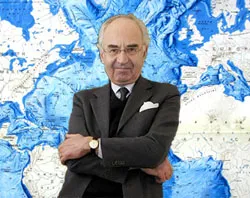
.- Current fiscal and monetary policies in the United States and Europe risk increasing government control over national economies, resulting in weakened political strength throughout “the whole of the western world,” the Vatican’s top banking expert said.

Ettore Gotti Tedeschi has been head of the Vatican's bank, known as the Institute for Religious Works, since 2009. He has a long career in finance, having served as the head of Banco Santander, the largest private bank in Europe, as well as on the boards of some of the continent’s leading financial institutions.

He is known as a staunch capitalist with a deep concern for the Church’s social teaching. He is also a former professor of financial ethics at the Catholic University of Milan.

Writing in the Jan. 14 edition of the Vatican newspaper, L’Osservatore Romano, Tedeschi warned of the growing influence of “Keynesian” economic theory on both sides of the Atlantic.

John Maynard Keynes was a prominent 20th-century economist whose theories were widely embraced by world powers to jump-start their economies after World War II.

Tedeschi cited a 2009 book, "Where Keynes Went Wrong: And Why World Governments keep creating Inflation, Bubbles and Busts," by the American economist and philosopher Hunter Lewis.

He said Lewis had spelled out the "doctrinal errors and practical disasters" of Keynes' theories.
In simple terms, Keynes taught that in times of economic crisis, consumer demand must be stimulated by government investment and an "attitude of saving" must be discouraged,

Tedeschi wrote.

He said Keynes' crisis-averting tactics can be seen in the U.S., where government economic policy has focused on increasing public expenditures – and public debt – in order to stimulate private economic activity, including consumer demand and employment.

In addition, also following Keynesian wisdom, the U.S. is printing more money and has looked at increasing taxes in an effort to generate more public revenues.

Tedeschi warned that these policies are leading to a "nationalization" of private debt in the U.S. He also criticized the government bailouts of private banks that offered too much credit without adequate guarantees. This too is leading to increased government control of the economy in the U.S. — a “nationalization” that is being paid for with newly printed currency.

In Europe, he said, the issue is the opposite. Because of the lack of widespread private debt, a "privatization" effort is being enacted to absorb the large public debt of banks and businesses.

This also is Keynesian policy, which "perseveres against the scorned savings," Tedeschi said.
Governments on both sides of the Atlantic, he said, are committed to Keynes' policy of increasing public debt to sustain levels of economic production, consumption, and employment.

He said artificially low interest rates are another key to the strategy of increasing spending and discouraging saving. With no incentive to keep money in the bank, those who would have otherwise been savers are pushed to spend.

"Zero interest rates factually equal a de facto transfer of wealth from he who was a virtuous saver (although not for Keynes) to he who has become virtuously (for Keynes) indebted," he said.

"Practically, it's about a hidden tax on poor savers, a tax transferred to the wealthy, (that is), over-indebted states, business people and bankers.”

Although the alternative to zero interest in such a situation is economic collapse and eventual default, the zero-rates "are not sustainable and are dangerous," Tedeschi warned.

"They destroy savings, which is an essential resource to create the base for bank credit; they promote speculation on real estate and securities, create illusory artificial values rather than scaling them down; they push consumption to more risky debt; they alter the market with artificial values and thus lead to belief that the very markets do not know how to correct themselves."

The biggest danger, Tedeschi said, is that zero interest rates "permit, or impose governments into management of the economy, without correcting inefficiency and facilitating distortions in the competition."

He warned that the greatest economic impacts may be on the way.

In the future, he said, inflation might be used as the "maneuver" to absorb the enormous debt in both the U.S. and Europe. Debt levels are now three times as large as the gross domestic product in most countries, he observed. Governments have thus far been able to control inflation by controlling consumption rates.

"Someone," he said, "is hoping for new taxes to sustain a new statism that reinforces a rather weak political class in the whole western world."

Monday, January 3, 2011

Pope: Europe Must Strengthen Christian (Catholic) Roots


This article comes from the Vatican Information Service blog.
-----------------------------------

Europe Must Strengthen Its Christian Roots

VATICAN CITY, 31 DEC 2010 (VIS) - The Holy Father has sent a Letter to Archbishop Julian Barrio Barrio of Santiago de Compostela, Spain, to marks today's closing of the Compostela Holy Year.

  The people who have made the pilgrimage to Santiago de Compostela during the course of this year "must return to their homes as the disciples of Emmaus returned to Jerusalem", the Pope writes. "We cannot be credible witnesses of God if we fail to collaborate with men and women and to serve them. This service to profound understanding and to the courageous defence of man is an evangelical requirement and an essential contribution that we, as Christians, can make to society".

  Addressing himself in particular to the young, "whom I will have the joy to meet next year in Madrid for World Youth Day", the Pope invites them to let themselves "be attracted by Christ, establishing a frank and serene dialogue with Him and asking themselves: Will the Lord be able to rely on me to be His apostle in the world, to be His messenger of love? May your response not be lacking in generosity, nor in the enthusiasm which led St. James to follow his Master with no concern for the sacrifices involved".

  The Holy Father then goes on to encourage seminarians "to identify themselves increasingly with Jesus, Who calls them to work in His vineyard. The priestly vocation is an admirable gift of which we should be proud, because the world needs people completely dedicated to making Jesus Christ present, shaping their lives and their activities around Him, daily repeating His words and gestures with humility, so as to be His image in the flock entrusted to their care".

  "As I conserve in my heart the recollection of my happy stay in Santiago de Compostela, I ask the Lord that the forgiveness and the aspiration to sanctity which have developed during this Compostela Holy Year may, under the guidance of St. James, help to make the redeeming Word of Jesus Christ present in that particular Church and in all of Spain. May this light", he concludes, "also be perceptible in Europe, as an incessant call to strengthen its Christian roots and thus increase its commitment to solidarity and the defence of man's dignity".

Friday, December 24, 2010

British Secularists Upset at Papal Radio Address


This article comes from Spero Forum.
------------------------------------

British secularists upset about Pope Benedict Christmas address on BBC

Pope Benedict XVI will deliver the Thought For The Day on BBC Radio on the morning of December 24,Christmas Eve. The Pope recorded the Thought For The Day in Rome today.

Gwyneth Williams of BBC said "I'm delighted Pope Benedict is sharing his Christmas message with the Radio 4 audience."

"It's significant that the Pope has chosen Thought For The Day to give his first personally scripted broadcast - and what better time to do so than on the eve of the biggest celebration on the Christian calendar."

Thought For The Day is broadcast on the BBC program during the morning hours from Monday to Saturday. It offers approximately three minutes of personal reflection from faith leaders and believers of a variety of religious denominations.

BBC Director-General Mark Thompson, a Catholic, is understood to have approached Vatican officials about a contribution from the Pope ahead of his state visit.

The National Secular Society has expressed anger over the broadcast. NSS president Terry Sanderson said in a statement, "After the overkill from the BBC during the Pope's visit, this indicates the corporation's obsession with religion, whereas the nation is largely indifferent to it."

Speroforum editor Martin Barillas is a former US diplomat, who also worked as a democracy advocate and election observer in Latin America. He is also a freelance translator.

Sunday, December 19, 2010

Benedict Calls for a "New Class of Intellectuals"


This article comes from Zenit.
-----------------------------------------------------


Benedict XVI Calls for New Class of Intellectuals

Delivers Christmas Greeting to Rome's University Students

VATICAN CITY, DEC. 19, 2010 (Zenit.org).- Italy needs "a new class of intellectuals," according to Benedict XVI.

The Pope said this Thursday in his annual pre-Christmas gathering with Rome's university students, held in St. Peter's Basilica. Some 5,000 students and professors from the universities of Rome attended the event, which was begun by John Paul II in 1979. Also present was the Holy Father's vicar for Rome, Cardinal Agostino Cardinal Vallini.

In his homily, Benedict XVI underscored the necessity of profound educational action and a continual discernment, which "must involve the whole academic community, promoting that synthesis between intellectual formation, moral discipline and religious commitment."

"In our times," he stressed, "one sees the need for a new class of intellectuals who are able to interpret social and cultural dynamics and offer solutions that are not abstract but concrete and realistic. The university is called to play this irreplaceable role and the Church is its convinced and active supporter."

At the beginning of the celebration, Renato Lauro, rector of the University of Rome "Tor Vergata," addressed a brief word of greeting to the Pontiff, emphasizing that "believing is not opposed to thinking and intellectual commitment, but it demands it and employs it in a new way with other motivations, as the past 2,000 years of the history of the West have demonstrated through philosophers, theologians, artists and men of science who were profound believers."

In his homily, Benedict XVI invited those presence to fix their gaze upon the stable of Bethlehem and to set out on that path to the Lord who was born to free "the heart from every ferment of intolerance and false expectation," which can always develop if one forgets "that God has already come, he is already at work in our history" and "he asks to be heard."

"Returning there, to that humble and august place, is not a merely ideal journey," he warned, "it is the journey that we are called to take experiencing today God’s nearness and his action that renews and sustains our existence."

"We too must travel to Bethlehem," he encouraged them, "with our gaze turned to God who is patient and faithful, who knows how to wait, who knows how to pause, who knows how to respect the seasons of our existence. That child who we will meet is the full manifestation of the mystery of the love of God, who loves, giving his life, who loves in a disinterested way, who teaches us to love and only asks to be loved."

At the conclusion of the prayer event, a delegation of African university students handed over the icon of Mary Sedes Sapientiae to a group of Spanish students, symbolically initiating the pilgrimage of the icon through all of Spain’s universities ahead of the 26th World Youth Day that will take place in Madrid in August 2011.

Saturday, December 18, 2010

Pope to Ambassador: Church & State Must Manage Society Together


This article comes from Zenit.
----------------------------------------------------------------

Religion Plays Key Role in Public Square, Says Pope

Greets Italy's New Ambassador to Holy See

ROME, DEC. 17, 2010 (Zenit.org).- The religious dimension fosters genuine progress, and the state would do well to protect its role in the public sphere, says Benedict XVI.

The Pope said this today upon receiving in audience Francesco Maria Greco, the new ambassador of Italy to the Holy See, who was presenting his letters of credence.

In his address to the diplomat, the Holy Father said he follows "the joyful and sad vicissitudes" of the country, and prays that the Lord will preserve in it "the valuable treasure of the Christian faith," as well as "the gifts of concord and prosperity."

Benedict XVI pointed out that the 150th anniversary of the unification of Italy will offer an occasion for reflection, and not just of a "commemorative character." He offered as one topic of reflection the relationship between the Catholic Church and the state.

The Pope reaffirmed that the Church in Italy is not seeking "power, privileges or positions of economic and social advantage," but only that it be assured "the full exercise of religious liberty," and that the "legitimate role" be recognized of "religions and religious communities in the public sphere."
Moreover, Italian history and culture are "so profoundly marked by the Catholic Church," he observed, that when an attempt was made in the past to deny or marginalize them, "dangerous imbalances were caused and painful fractures in the social life of the country."


In this connection, the Pope referred to the "attempt to eliminate from public places the display of religious symbols," in reference to the case in which a native of Finland appealed to the European Court of Human Rights to require that crucifixes be removed from classrooms in Italy.

The Pontiff expressed his appreciation to the Italian government for having acted "in conformity with a correct view of laicism and in the light of its history, culture and tradition, finding in this also the positive support of other European countries."

Italy appealed the 2009 decision on Lautsi v. Italy, which originally ruled in favor of an Italian citizen of Finnish origin who complained in 2002 that the state school where her two children studied violated their freedom by displaying crucifixes. Ten states -- Armenia, Bulgaria, Cyprus, Greece, Lithuania, Malta, Monaco, Romania, the Russian Federation, and San Marino -- officially participated in the appeal, and four more -- Ukraine, Moldova, Albania, and Serbia -- gave their official support.

Finally, the Pope recalled that at present there still are "open violations of religious liberty," and added that he hoped that "awareness of this problem will grow everywhere," and "that efforts will be intensified to see realized, everywhere and for everyone, full respect of religious liberty."

Moral dimension

Earlier, in his address of greeting to the Pope, Greco said that "respect for the secular aspect of the state certainly does not make us deaf to Your Holiness' invocation that every economic and political decision not preclude a moral dimension."

"Even the most intransigent secular spirits cannot, in fact, deny the public role that faith and religion should have in governance, which allows believers as well as non-believer, to invoke coherence between ethics and politics," he continued.

Because of this, the ambassador added, "we are convinced that the Church can also contribute to give back a new energy to the national community, keeping high the sense of unity of the nation which must be echoed by a solidaristic federalism and reinforced social cohesion."


This solidarity "must not be understood as divesting oneself of responsibility or welfarism, but as a propelling force that drives man to commit himself in justice and peace," specified Greco.

The ambassador then mentioned the collaborative relations that link both states, as well as their consonance in interventions both in the national realm as well as the international scene. In particular, he stressed the common commitment in "the struggle against religious discrimination and the intercultural and interreligious dialogue," which has become for Italy "the new frontier of its foreign policy."

Friday, December 17, 2010

Irish Investigators: Vatican Protected Rapist


This article comes from the Irish Times.
-----------------------------------------------------

Scale of Walsh cover-up by church breathtaking

Mary Raftery


THE SCALE of the cover-up by the Catholic Church of the crimes of Fr Tony Walsh, as finally revealed in chapter 19 of the Murphy report, is breathtaking. It is more extensive than any other single case dealt with in the main body of the report.

Archbishops, bishops, chancellors, vicars general, parish priests – the list of senior clerics who knew of Walsh’s serial sexual abuse of children is virtually endless. From the very first complaints brought to the archdiocese, a bare two days after Walsh’s ordination in 1978, and for the succeeding 17 years, these pillars of the church sat on their detailed knowledge of Walsh’s abominable predations on children, shielding him from the law, deliberately deciding to keep his crimes hidden from the civil authorities. In the course of those 17 years, until the archdiocese finally decided in 1995 to co-operate with Garda investigations, Walsh abused well over 100 children according to the chapter published yesterday. Here we find out that archbishops Dermot Ryan, Kevin McNamara and Desmond Connell all had detailed knowledge of Walsh’s criminal activities.

Chapter 19 is full of references to discussions about Walsh at the monthly meetings of the Dublin bishops – during the years in question, they include auxiliary bishops Donal Murray, Dermot O’Mahony, James Kavanagh and Eamonn Walsh, together with Brendan Comiskey, Laurence Forristal, James Moriarty, Joseph Carroll, Patrick Dunne and Desmond Williams.
Of these, most are retired or deceased. bishops Murray and Moriarty resigned on foot of the publication of the substantive Murphy report last year. In fact, the only one still in office is Bishop Eamonn Walsh.

He and fellow auxiliary Ray Field famously tendered their resignations – with great reluctance – on Christmas Eve 2009. It emerged several months later the Vatican had refused to accept them and the two bishops remain in situ.

Bishop Walsh defended himself last December by claiming that “as far back as 1990, I wasn’t a month in the job as a bishop, and I stood up at a meeting and I said that not alone should the police, who were already informed about an individual, but we should say where he was living and the number of his car, because I felt he was a danger”.

That individual was Tony Walsh and this incident does indeed appear in chapter 19 of the Murphy report, where it is described as “the first time that the possibility of reporting to the gardaí was raised”. The suggestion was shot down by the archdiocese’s leading canon lawyer at the time, Msgr Gerard Sheehy, who described it as “an outrageous suggestion”. Also present at that meeting were archbishop Connell and bishops Kavanagh, O’Mahony and Murray.

Two key points emerge: first, that Bishop Eamonn Walsh (a trained barrister, incidentally) was sufficiently well-aware of the criminal nature of Walsh’s activities to know that he should be reported to the Garda; and second, that Bishop Walsh did not report him, and nor of course did any of his fellow bishops. It consequently shows an extraordinary detachment from reality for Bishop Walsh to have claimed last year that merely suggesting that gardaí be informed of crimes committed in some way excuses or exonerates him from responsibility for his part in the culture of cover-up in the Dublin archdiocese. The only other serving bishop involved in the Walsh case is John McAreavey of Dromore. While still a priest, he was one of the judges who sat on the internal tribunal in 1992 which decided to laicise Walsh.

Neither he nor his fellow judge, the now retired bishop of Killaloe Willie Walsh, saw fit to report to gardaí their knowledge of the crimes of Walsh.

Although Bishop McAreavey is not specifically named or criticised in chapter 19, it will be interesting to see if he can continue to maintain his stony silence on the matter.

And what are we to make of another senior cleric’s matter-of-fact reporting that he “evaded” questions from a garda? This was the chancellor or chief administrator of the archdiocese, Msgr Alex Stenson, recording his conversation with a garda about Walsh in 1991. A parent had contacted the garda, concerned about Walsh but with no hard evidence of a crime committed. Msgr Stenson had heard that the garda was asking around and rang him to find out how much he knew. In the course of the conversation, the garda asked Msgr Stenson if Walsh had a past record. “I evaded that,” recorded Msgr Stenson in his 1991 memo.

The chancellor’s evasion meant that the Garda Síochána remained in the dark about Walsh and his crimes. There is at the very least an argument to be made that this amounts to an obstruction of justice.

After all, who knows better than a cleric that a sin of omission is every bit as serious as one of commission? And lying (by omission) to the police should rank high on anyone’s scale of wrongdoing, even more so where the safety of children is concerned.

The gardaí themselves also stand condemned in chapter 19 for their failure to pursue investigations of Walsh in 1991 and 1992 on foot of concerns expressed by parents about contact between the priest and their children. In their defence, the Murphy report points out that there was no specific evidence of crime brought to their attention at this stage, and further that the archdiocese did not share any of its extensive information on Walsh.

Nonetheless, it is profoundly disturbing to read, for instance, that Msgr Stenson records in 1991 that a garda “assured me that there was ‘no question of prosecution’ ”. This same garda gave evidence at the internal church tribunal hearings on the laicisation of Walsh, and had dealings with the then Fr Willie Walsh (later of course bishop of Killaloe), when he arrived at Whitehall Garda station “stating that he had been appointed to carry out an internal investigation into the paedophile activities of Fr [Walsh]”.

It is clear that the Garda should now extend its own internal inquiries to include the Walsh case among the others unearthed by the Murphy commission where Garda investigations into clerical child abuse were inadequate. The results of these inquiries should be published in full.

It is vital for public confidence in the force that its past failures in this area be thoroughly exposed, and that rigorous procedures be in place to detect and guard against shielding either institutions or individuals from the full force of the law.

Tuesday, December 14, 2010

Vatican Bank Let Clergy Act as Front for Mafia


This article comes from The Independent.
----------------------------------------------

Vatican Bank 'allowed clergy to act as front for Mafia'

Victor Simpson

The Vatican Bank is under new scrutiny in a case involving money-laundering allegations that led police to seize €23m (£19.25m) in September.

The Vatican calls the seizure of assets a "misunderstanding" and expresses optimism it will be quickly cleared up. But fresh court documents show that prosecutors say the Vatican Bank deliberately flouted anti-laundering laws "with the aim of hiding the ownership, destination and origin of the capital". The documents also reveal investigators' suspicions that clergy may have acted as fronts for corrupt businessmen and Mafia.

The documents pinpoint two transactions that have not been reported: one in 2009 involving the use of a false name, and another in 2010 in which the Vatican Bank withdrew €650,000 from an Italian bank account but ignored bank requests to disclose where the money was headed.

The new allegations of financial impropriety could not come at a worse time for the Vatican, already hit by revelations that it sheltered paedophile priests. The corruption probe has given new hope to Holocaust survivors who tried unsuccessfully to sue in the United States, alleging that Nazi loot was stored in the Vatican Bank.

Yet the scandal is hardly the first for the bank, already distinguished from other banks by the fact that its cash machines are in Latin and priests use a private entrance.

In 1986, a Vatican financial adviser died after drinking cyanide-laced coffee in prison. Another, Roberto Calvi, was found dangling from a rope under London's Blackfriars Bridge in 1982, his pockets stuffed with money and stones. The incidents blackened the bank's reputation, raised suspicions of ties with the Mafia, and cost the Vatican hundreds of millions of dollars in legal clashes with Italian authorities.

On 21 September, financial police seized assets from a Vatican Bank account. Investigators said the Vatican had failed to furnish information on the origin or destination of the funds as required by Italian law.

The bulk of the money, €20 million, was destined for the American JP Morgan bank branch in Frankfurt, Germany, with the remainder going to Banca del Fucino, an Italian bank.

Prosecutors alleged the Vatican ignored regulations that foreign banks must communicate to Italian financial authorities where their money has come from. All banks have declined to comment.

Sunday, December 12, 2010

Analyst Dissects Vatican WikiLeaks Fallout


This article comes from the National Catholic Reporter.
----------------------------------------------------

Sex abuse crisis, Vatican PR woes figure in WikiLeaks scoops

By John L. Allen, Jr.

Secret diplomatic cables revealed this morning as part of the WikiLeaks releases confirm that while the Vatican was appalled by revelations of clerical sexual abuse in Ireland in 2009 and 2010, it was also offended by demands that the papal ambassador participate in a government-sponsored probe, seeing it as an insult to the Vatican’s sovereign immunity under international law.
 
That stance, according to the cable, came off in Ireland as “pettily procedural” while failing to confront the reality of clerical abuse, and thereby made the crisis worse.

The cables also contain critical diplomatic assessments of Pope Benedict XVI’s recent decision to create new structures to welcome disgruntled Anglicans, as well as the perceived technological illiteracy and communications ineptitude of some senior Vatican officials.

PR woes in the Vatican, according to one cable, have lowered the volume on the pope’s “moral megaphone.”

Newly disclosed cables also indicate that:

• The Vatican has expressed desire to resist the influence of Venezuelan Socialist strongman Hugo Chavez across Latin America;

• It agreed to quietly encourage countries to support the Copenhagen accord on climate change, even though the Holy See does not officially take positions on draft agreements;

• It hoped that Poland would act as a bulwark against radical secularism within the European Union, especially by “holding the line” on life and family issues;

• Then-Cardinal Joseph Ratzinger opposed Turkey’s entry into the European Union, but as pope, Benedict XVI has taken an official neutral stance, while continuing to emphasize the importance of Europe’s Christian roots.

While the cables unveiled this morning don’t really contain any surprises about the Vatican itself, they do lift the veil on how American diplomats and their colleagues have viewed various moves by Rome in recent years.

The revelations come mostly in cables from the U.S. Embassy to the Holy See back to the State Department in Washington, often expressing information gleaned from conversations either with church sources or with other diplomats in Rome.

The cables were unveiled in the Dec. 11 issue of the U.K.-based Guardian newspaper.

One 2009 cable, titled “Sex abuse scandal strains Irish-Vatican relations, shakes up Irish church, and poses challenges for the Holy See,” reports on a conversation between Julieta Valls Noyes, the number two official at the U.S. embassy to the Vatican, and her counterparts in the Irish embassy to the Holy See.

Noyes writes that while the Vatican’s first concern was for the victims of abuse, it also felt that requests for its ambassador in Ireland to cooperate with the “Murphy Commission” probe threatened its sovereignty under international law.

The cable reports that the Vatican’s Secretary of State, Cardinal Tarcisio Bertone, ultimately wrote to the Irish Embassy to the Holy See to insist that any requests for information should come through proper diplomatic channels.

That stance, Noyes wrote, produced backlash in Ireland: “Much of the Irish public views the Vatican protests as pettily procedural and failing to confront the real issue of horrific abuse and cover-up by Church officials,” she wrote.

As the Irish situation developed in late 2009 and early 2010, Noyes went on to say, “the normally cautious Vatican moved with uncharacteristic speed to address the internal church crisis,” pointing to a meeting between Pope Benedict and Irish bishops in February 2010, but she also says that contacts both in Ireland and the Vatican expect the crisis “to be protracted over several years.”

In another 2009 cable, Noyes describes a conversation with Francis Campbell, the ambassador of the United Kingdom to the Holy See, about the pope’s decision to create new structures, called “personal ordinariates,” to welcome traditionalist Anglicans upset with liberalizing moves such as the ordination of women and openly gay bishops, and the blessing of same-sex unions.

The move put the Archbishop of Canterbury, Rowan Williams, in an “impossible situation,” according to Campbell, and potentially constituted “the worst crisis in 150 years” in Anglican-Catholic relations.

According to Noyes’ description of the conversation, Campbell warned that the move could unleash latent anti-Catholicism in the United Kingdom, and even provoke acts of violence in isolated cases.

The cable from the U.S. diplomats expressed doubt about “whether the damage to inter-Christian relations was worth it,” especially, it said, “since the number of disaffected Anglicans that will convert is likely to be a trickle rather than a wave.”

Another cable from January 2009 from Noyes, written in the wake of a global controversy provoked by Pope Benedict’s decision to lift the excommunications of four traditionalist Catholic bishops, including one who is a Holocaust denier, said the case revealed a serious “communications gap” in the Vatican.

That gap, according to the cable, leads to “muddled, reactive messaging that reduces the volume of the moral megaphone the Vatican uses to advance its objectives.”

The Vatican spokesperson, Jesuit Fr. Federico Lombardi, is the only senior papal aide to use a Blackberry, according to the cable, and most senior Vatican officials don’t even use e-mail accounts.

Because senior Vatican officials typically do not understand the nature of modern communications, the cable asserted, they often speak in “coded” language impossible for the outside world to decipher. Noyes cited an example from the Israeli ambassador to the Holy See, who said he had been given a letter from the Vatican which supposedly contained a positive message for his country, but it was “so veiled he missed it, even when told it was there.”

Part of the communications problem, the cable asserted, is structural: Lombardi is not part of the pope’s inner circle, so he “is the deliverer, rather than a shaper, of the message,” and he is “terribly overworked.”

In the wider Catholic world, the cable added, there are communications success stories – pointing in particular to the way the Catholic group Opus Dei responded to the frenzy created by the novel and movie “The Da Vinci Code.”

In general, the cable reported there's ferment in the Vatican about the need for better communications strategies, but little concrete sense of what to do about it.

“Our Vatican contacts seem to be talking about nothing but the need for better internal coordination on decisions and planned public messages,” it said. “But if or when change will come remains an open question.”

For the moment, it doesn't seem that today's disclosures are likely to create a diplomatic crisis, especially given that the Vatican announced preemptively that it did not want the WikiLeaks revelations to disrupt U.S./Vatican ties.

For one thing, Vatican officials realize that at least some of the critical assessments expressed in the leaked cables, especially on the PR front, are widely shared inside the Vatican itself. In addition, the Obama White House has tried to send reassuring signals to Rome, including the recent appointment of a presidential delegation to attend the Nov. 20 consistory for the creation of 24 new cardinals. It was the first time a U.S. president sent an official delegation to a consistory, and it was seen in the Vatican as a diplomatic way of expressing respect.

At mid-morning, Lombardi, the Vatican spokesperson, released a statement in both Italian and English on the WikiLeaks disclosures.

"Without venturing to evaluate the extreme seriousness of publishing such a large amount of secret and confidential material, and its possible consequences" the statement read, "the Holy See Press Office observes that part of the documents published recently by Wikileaks concerns reports sent to the U.S. State Department by the U.S. Embassy to the Holy See."

"Naturally these reports reflect the perceptions and opinions of the people who wrote them," the statement said, "and cannot be considered as expressions of the Holy See itself, nor as exact quotations of the words of its officials. Their reliability must, then, be evaluated carefully and with great prudence, bearing this circumstance in mind."

U.S. Ambassador to the Holy See Miguel Diaz likewise issued a statement, condemning the leaks "in the strongest possible terms" while declining to comment on their authenticity.

The United States and the Holy See are working together on multiple fronts, Diaz said, from fixing the global economy to human rights, climate change and interfaith dialogue, and those partnerships "will withstand this challenge."

Saturday, December 11, 2010

Wikileaks: Pope Blocked Sex Abuse Investigation

 
This article comes from MSNBC.
---------------------------------------------------

Wikileaks: Pope impeded abuse investigation

Pope Benedict refused to allow Vatican officials to testify in an investigation by an Irish commission into alleged child sex abuse by priests, according to U.S. diplomatic cables released by WikiLeaks, The Guardian newspaper reported. 

Benedict was also reportedly furious when Vatican officials were called upon in Rome, The Guardian reported Saturday.

The Murphy Commission of Inquiry into sexual and physical abuse "offended many in the Vatican," according to a cable dated February 26, 2010.

"The Vatican believes the Irish government failed to respect and protect Vatican sovereignty during the investigations," it said.

On Saturday, the Vatican press office declined to comment on the content of the cables but decried the leaks as a matter of "extreme gravity."

The U.S. ambassador to the Holy See also condemned the leaks and said the Vatican and America cooperate in promoting universal values.

Other latest revelations include that Britain's Vatican ambassador feared anti-Catholic violence in Britain after Benedict offered to accept traditionalist Anglicans into the Roman Catholic Church.
 

Catholic-Anglican relations faced their worst crisis in 150 years because of the offer, which undercut the authority of Archbishop of Canterbury Rowan Williams, the cable quoted Ambassador Francis Campbell as saying after the offer last year.

Five Anglican bishops in Britain announced last month that they would join the Catholic Church early next year, in response to the offer made in October 2009 to Anglican clergy opposed to the ordination of women bishops in the Church of England.

The cable, dated November 30, 2009 and published by The Guardian, reflected concerns that have since eased. Tensions that it predicted for the pope's visit to Britain in September this year did not materialize.

Immunity granted to Vatican officials  
According to the cable detailing the Vatican's refusal to cooperate in the abuse investigation, the Vatican believed opposition politicians in Ireland were publicly putting pressure on the government to vilify the Vatican just to make "political hay".

The Irish government, meanwhile, wanted "to be seen as co-operating with the investigation" because its churches and education department were also involved in the scandal.

The Irish ambassador's deputy, Helena Keleher, told U.S. diplomats that her government eventually acquiesced to the Vatican and granted their officials immunity from testifying, the Guardian reported.

"Foreign ambassadors are not required or expected to appear before national commissions," the cable said.

Still, the Irish commission was able to gather enough evidence and testimony to conclude that some bishops had put the Catholic church before the victims by covering up claims of abuse, the Guardian reported.

In the cable describing the British fears over anti-Catholic violence, U.S. ambassador to the Vatican Miguel Diaz said British ambassador Campbell noted that England's Catholics were a minority and mostly of Irish origin.

"There is still latent anti-Catholicism in some parts of England and it may not take much to set it off," it said, paraphrasing his words. "The outcome could be discrimination or in isolated cases even violence against this minority."
 
Speaking after the two churchmen met at the Vatican last month, Campbell said the pope had "put Williams in an impossible situation" and the archbishop's cautious reaction — meant to avoid harming relations with Rome — angered some Anglicans. 

Diaz ended the cable asking "whether the damage to inter-Christian relations was worth it — especially since the number of disaffected Anglicans that will convert is likely to be a trickle rather than a wave."

Another cable dated November 9, 2009 said Campbell told Diaz that the Catholic Church would face "unforeseen obstacles" if many traditionalist Anglicans took up Benedict's offer.

"A large transition of Anglican converts could overwhelm the financial resources of many dioceses," it cited him as saying.

No consideration for Church of England  
The Anglicans most likely to make the switch were the most conservative, he said.
"In uniting traditionalist Anglicans with the Catholic Church, the pope is bringing together two groups strongly committed to defending Europe's Christian heritage — a theme he strongly champions," it added.

The cable cited an unnamed source as saying Williams was probably informed about the offer only a day before it was announced. When he expressed concern about it, he was told the Vatican had made its decision and was going ahead.

According to the November 30 cable, Campbell felt the Vatican had acted without considering what its move would mean for the Church of England, mother church for the world's 80 million Anglicans, or their spiritual leader Williams.

"The Vatican decision seems to have been aimed primarily at Anglicans in the U.S. and Australia, with little thought given to how it would affect the center of Anglicanism, England, or the Archbishop of Canterbury," it said in relating his view.

The Vatican announced last month that its first so-called ordinariate for Anglican converts would be established in Britain. Bishops and priests would join the Church in the first half of the year, followed by lay people wanting to switch.

Reuters, The Associated Press and msnbc.com staff contributed to this report.

Monday, December 6, 2010

Pope, Hungarian PM Discuss EU Leadership


This article comes from the Vatican Information Service.  The video is from Rome Reports.
-----------------------------------------------------

HOLY FATHER RECEIVES PRIME MINISTER OF HUNGARY
 
VATICAN CITY, 6 DEC 2010 (VIS) - Today at noon, the Press Office of the Holy See made public the following communique:

"On the morning of Monday, 6 December, the Holy Father Benedict XVI received in audience His Excellency Mr. Viktor Orban, Prime Minister of the Republic of Hungary, who successively met with the Secretary of State, His Eminence Cardinal Tarcisio Bertone, accompanied by His Excellency Msgr. Dominique Mamberti, Secretary for Relations with States".

"During the cordial discussion, the prime minister outlined the country's current social, economic, and political situation. The importance of the Christian tradition in the life of the nation and the role of the Catholic Church for its renewal was emphasized. The next semester of Hungarian presidency of the European Union was then discussed, highlighting some convergences of vision between Hungary and the Holy See on major themes that concern the European continent. Finally, a few items regarding relations and cooperation in the region were covered".

Saturday, November 13, 2010

Pope, Curia Discuss Catholicization of Europe/America


This article comes from Catholic Culture.
------------------------------------------------------------

Pope meets with leaders of the Roman Curia

Pope Benedict XVI met on November 12 with the heads of all the major offices of the Roman Curia. Although the Vatican did not announce the purpose of the meeting, informed sources said that the Vatican officials discussed plans for the new Pontifical Council for New Evangelization. 

On October 12, the Pope formally inaugurated the new Pontifical Council, with Archbishop Salvatore (Rino) Fisichella as its president. At that time, Archbishop Fisichella said that concrete plans for the work of the new dicastery were still in a formative stage. 

The creation of the new Pontifical Council, with a broad mandate to promote the faith in Europe and North America, would probably require shifting some lines of responsibility for other offices of the Roman Curia.

Saturday, November 6, 2010

Pope Begins Campaign to Re-Catholicize Europe


This article comes from Zenit.
---------------------------------------------------

Pontiff Tells Europe: God is Not the Enemy

Urges Continent to Meet Christ Without Fear

SANTIAGO DE COMPOSTELA, Spain, NOV. 6, 2010 (Zenit.org).- Benedict XVI is encouraging Europe to let go of the idea that God is an enemy to its freedom, and to open itself to him without fear.

The Pope said this today in the homily he delivered on the occasion of the Compostelian Jubilee Year. The Mass took place in the Plaza del Obradoiro in Santiago de Compostela.

"God exists and he has given us life," the Holy Father affirmed to the thousands present. "He alone is absolute, faithful and unfailing love, that infinite goal that is glimpsed behind the good, the true and the beautiful things of this world, admirable indeed, but insufficient for the human heart. St. Teresa of Jesus understood this when she wrote: 'God alone suffices.'"

The Pontiff lamented that Europe in the 19th century somehow grew convinced that "that God is somehow man's antagonist and an enemy of his freedom," and that there was an "attempt to obscure the true biblical faith."

"God is the origin of our being and the foundation and apex of our freedom, not its opponent," Benedict XVI asserted.

"We need to hear God once again under the skies of Europe," the Pope affirmed. "May this holy word not be spoken in vain, and may it not be put at the service of purposes other than its own. It needs to be spoken in a holy way. And we must hear it in this way in ordinary life, in the silence of work, in brotherly love and in the difficulties that years bring on."

"Europe must open itself to God, must come to meet him without fear," the Pontiff continued, "and work with his grace for that human dignity which was discerned by her best traditions: not only the biblical, at the basis of this order, but also the classical, the medieval and the modern, the matrix from which the great philosophical, literary, cultural and social masterpieces of Europe were born."

Benedict XVI said Europe can look to the cross for guidance. He called it the "supreme sign of love."

"The cross and love, the cross and light," he explained, "have been synonymous in our history because Christ allowed himself to hang there in order to give us the supreme witness of his love, to invite us to forgiveness and reconciliation, to teach us how to overcome evil with good."

The Pontiff urged those present to "learn the lessons of that Christ whom we encounter at the crossroads of our journey and our whole life, in whom God comes forth to meet us as our friend, father and guide."

He added, "Blessed Cross, shine always upon the lands of Europe!"

Dignity

Benedict XVI also spoke of the need to promote the dignity of the person, and warned of "the threats to his dignity resulting from the privation of his essential values and richness, and the marginalization and death visited upon the weakest and the poorest."

"One cannot worship God without taking care of his sons and daughters," he said. "And man cannot be served without asking who his Father is and answering the question about him."

The Pope stated: "The Europe of science and technology, the Europe of civilization and culture, must be at the same time a Europe open to transcendence and fraternity with other continents, and open to the living and true God, starting with the living and true man.

"This is what the Church wishes to contribute to Europe: to be watchful for God and for man, based on the understanding of both which is offered to us in Jesus Christ."

Wednesday, October 27, 2010

Nazi Victims Ask EU to Investigate Vatican Bank


This article comes from Bloomberg.
---------------------------------------------------

Nazi Victims Ask EU to Probe Vatican on Looted Assets

By Jeffery Donovan & Lorenzo Totaro

Holocaust survivors from the former Yugoslavia accused the Vatican of helping Nazi allies launder their stolen valuables and have asked the European Commission to investigate their claims. 

“We are requesting the commission open an inquiry into allegations of money laundering of Holocaust victim assets by financial organs associated with or which are agencies of the Vatican City State,” Jonathan Levy, a Washington-based attorney for the survivors and their heirs, wrote in a letter dated Oct. 20 to Olli Rehn, the European Union’s economic and monetary affairs commissioner. Levy provided the letter to Bloomberg. 

The request follows a decade-long lawsuit in U.S. courts on behalf of Holocaust survivors and their heirs from the former Yugoslavia and Ukraine. That case, basing its claims on a U.S. State Department report on the fate of Nazi plunder, alleged that the Vatican Bank laundered assets stolen from thousands of Jews, gypsies and Serbs killed or captured by the Ustasha, the Nazi-backed regime of wartime Croatia. The Vatican repeatedly denied the charges and the findings of the 1998 U.S. report. 

Amadeu Altafaj, Rehn’s spokesman, said in Brussels today that the commission had received Levy’s letter and contacted Vatican authorities about it. Vatican spokesman Father Federico Lombardi declined to comment on Levy’s request to the commission. 

Vatican Immunity 

The U.S. case, which sought as much as $2 billion in restitution, was dismissed last December by a U.S. appeals court in San Francisco on grounds that the Vatican Bank enjoyed immunity under the 1976 Foreign Service Immunities Act, which may prevent foreign governments from facing lawsuits in the U.S. 

The commission should have the authority to probe the Institute for Religious Works, or IOR, as the Vatican Bank is called, according to Levy’s letter. It cites a monetary accord signed on Dec. 17 of last year. Under the agreement the Vatican, which uses the euro and issues euro coins, pledged to implement EU laws against money laundering, counterfeiting and fraud. 

Rome prosecutors have also sought to show that the Vatican bank is covered under European law. Last month they seized 23 million euros ($32 million) from an Italian account registered to the IOR as they opened a probe into alleged violations of money-laundering laws by the Vatican Bank. 

“We looked at all the places where the Vatican may have surrendered sovereignty,” Levy said in a telephone interview. “The only place we could find was with the euro, where they placed themselves under the jurisdiction of either the European Central Bank or the European Commission.” 

Swiss Payout 

Levy initially contacted the legal office of the Frankfurt- based ECB and was told to take the claim to the commission, he said. An ECB spokeswoman confirmed that after being contacted by Levy, the central bank advised him to go directly to the EU’s executive arm. 

The U.S. lawsuit was first filed in 1999, one year after an official Swiss commission concluded that Switzerland received three times more gold taken from Nazi victims than previously estimated by the U.S. government. The same year, UBS AG and Credit Suisse AG, the biggest Swiss banks, agreed to pay $1.25 billion in compensation to Holocaust survivors and their heirs. 

In his letter, Levy said “gold and other valuables” stolen in the “genocidal” murder of 500,000 Serbs, Jews and gypsies “were deposited at the Vatican in 1946,” according to “contemporaneous documents authored by Allied investigators” and “the sworn testimony of former U.S. Special Agent William Gowen.” He interviewed and investigated the Ustasha involved in transferring the loot while stationed in Rome after the war. 

Euro Coins

Under its agreement with the commission, Vatican City State, a sovereign nation outside the EU, may issue a maximum of 2.3 million euros in coins in 2010 through the Italian mint, not including a further variable amount. The Vatican also pledged to implement EU legislation against money laundering by year-end.

Rehn said the Vatican has submitted its first draft laws “on the prevention of money laundering and the fight against fraud and counterfeiting” and the commission is analyzing them, according to his reply to a question from a member of the European Parliament, posted on its website on Sept. 9.

Lombardi on Oct. 23 declined to say whether the Vatican intends to meet the Dec. 31 deadline for implementing the EU legislation.

To contact the reporters on this story: Jeffrey Donovan at jdonovan26@bloomberg.net; Lorenzo Totaro in Rome at ltotaro@bloomberg.net.

To contact the editor responsible for this story: John Fraher at jfraher@bloomberg.net
 

Friday, October 1, 2010

Pope Pontificates to European Bishops


This article comes from Zenit.
----------------------------------------------------

Pope to European Bishops: Defend Family, Life

Observatory Created on Discrimination Against Christians

ZAGREB, Croatia, SEPT. 30, 2010 (Zenit.org).- Benedict XVI is urging the bishops of Europe to work for the defense of the family and human life, and to fight against intolerance and discrimination of Christians.

The Pope sent a telegram, through his secretary of state, Cardinal Tarcisio Bertone, to participants in a plenary assembly of the Council of European Bishops' Conferences.

The assembly began today in Zagreb, and will focus on the theme, "Demographics and the Family in Europe." It will end Sunday.

In the telegram, the Pontiff encouraged the prelates "to continue the important work undertaken and inspire in the Church communities the necessary commitment so that the faithful might be free from intolerance and discrimination and to promote the family and the defense of human life."

He assured the participants of his prayers "so that the providential meeting may contribute to strengthening the bonds of unity and communion between the European bishops giving a further courageous thrust to the new evangelization of the continent."

The Holy Father imparted "the requested apostolic blessing as a pledge of abundant Divine assistance."

Identity crisis

In his opening speech, Cardinal Peter Erdo, president of the council and archbishop of Esztergom-Budapest, offered an analysis of the situation in Europe.

"Europe, this continent in which many cultures have found the Gospel, and from where so many missionaries have set out to proclaim the Word to the ends of the earth, is today experiencing an identity crisis," he noted.

"Europe needs God," the prelate said, "to recall its own roots and therefore to look to the future with realism and hope."

He noted, however, the challenges faced by Christians who attempt to share their faith with others.

In this light, the cardinal announced the birth of an "Observatory on Intolerance and Discrimination Against Christians in Europe," which aims to "promote greater awareness of the forms of intolerance and discrimination which some Christians in Europe suffer, and in agreement with what was decided in our previous assemblies."

He continued: "This observatory does not aim to be a tool for disputes, but an aid to create a society more respectful of religious freedom, more capable too of understanding and accepting both its own roots and the plural reality through a healthy secularism. 

"In short, it is, on the one hand, a help to modern evangelization, and, on the other, a help to the development of an authentic democracy based on equality in our continent."

Evangelization

Cardinal Erdo underlined "the urgency of the new evangelization," which "has always been [the council's] main aim." He pointed to the Pontifical Council for the Promotion of the New Evangelization, recently established by Benedict XVI, as "a clear sign of the Holy Father's judgement about this urgency."

The prelate noted that "a clear consequence of the unease in our society is also present in the question which we want to tackle in greater depth over these days: demographics and its necessary link to the question of the family."

"The family's state of health is an image of the health of society and vice versa," he added.
The cardinal affirmed that "the family and life are an integral part of God's plan and they are God's way of making us anticipate full communion with him."

He continued, "The beauty of love between a man and a woman, who for the whole of their lives unite and make of their love a gift to also welcome and educate new people, is and will always be the most beautiful image of God."

"The Church calls for policies to be put in place which are appropriate to the real needs of the family and asks that concrete aid measures be always more consistent and effective to the reality of the family," Cardinal Erdo stated.

"However," he added, "perhaps what is missing the most in our society and also in our families, are not solutions for solving immediate problems, even if this can be sometimes necessarily urgent, but above all the enthusiasm is missing, the energy which God gives us if we live in him."

In working for the good of the family, the prelate acknowledged the "great harmony both in the anthropological and in the theological reasons that support the Christian vision of the family and the urgent need to protect it between the Catholic Church and the Orthodox Churches."

He concluded by expressing the hope that this annual meeting of the bishops will be one of "intense reflection" for the good of the family and European society, but also "of prayer and friendship."